Fencing is one of the most replaced elements in a garden, and one of the most under-specified. Most homeowners replace like-for-like after a fence blows down, without ever considering whether a better option exists. Here is a guide to the main fence types we install across Surrey, with honest pros, cons and price ranges.
1. Close board fencing
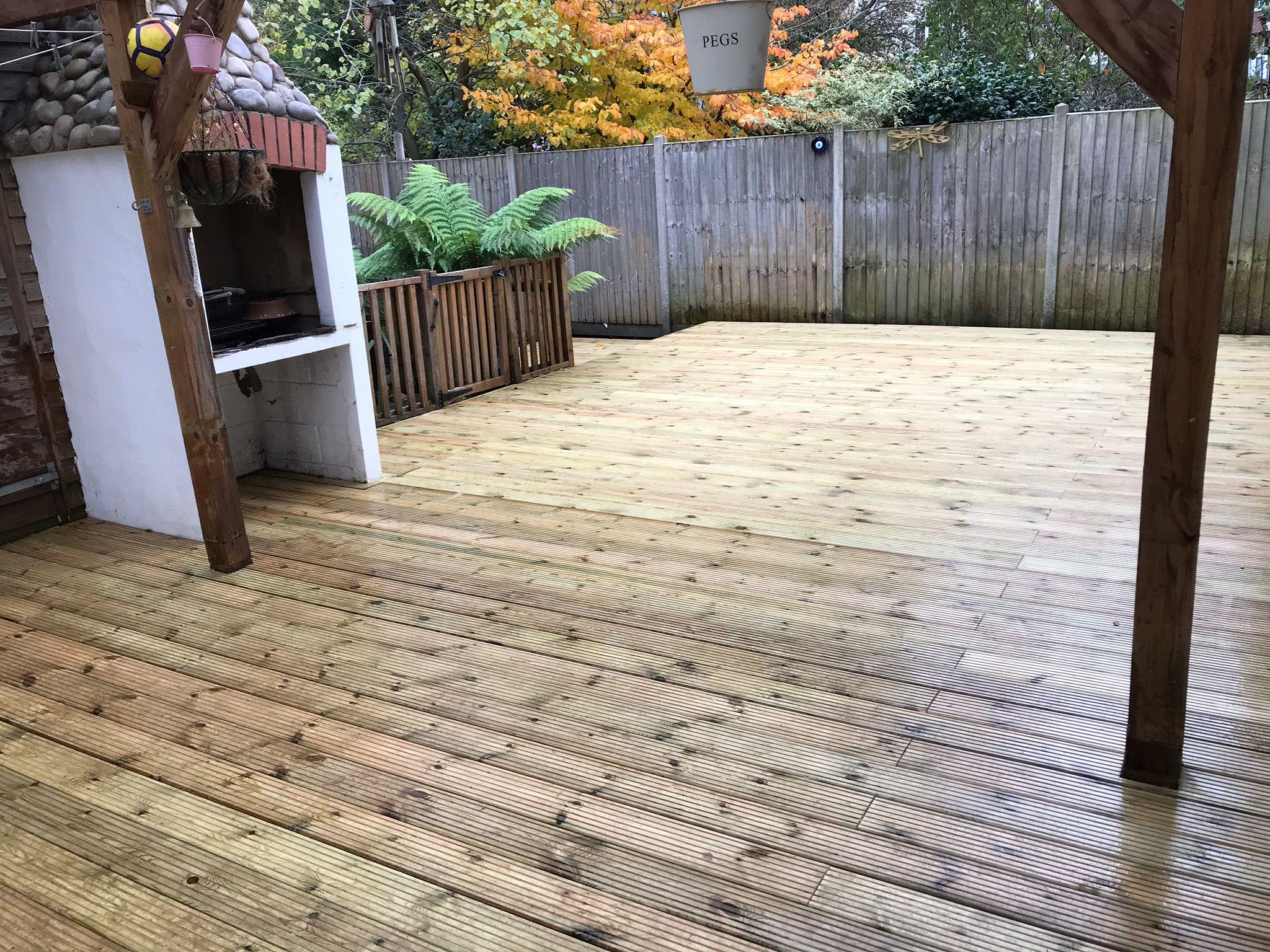
Close board, also called featherboard, is the most durable timber fence type available. Individual featheredge boards are nailed to horizontal rails (arris rails) which are attached to concrete or timber posts. Because each board overlaps the next, the fence remains structurally sound even if an individual board warps or splits. The boards can be replaced individually without taking the whole fence down.
It provides excellent privacy and security, handles exposed, windy conditions better than panel fencing, and accepts stain or paint well. A quality close board fence on concrete posts will last 20-plus years with basic maintenance (re-staining every 2 to 3 years). This is our recommended choice for most boundary fencing projects.
2. Horizontal slat fencing
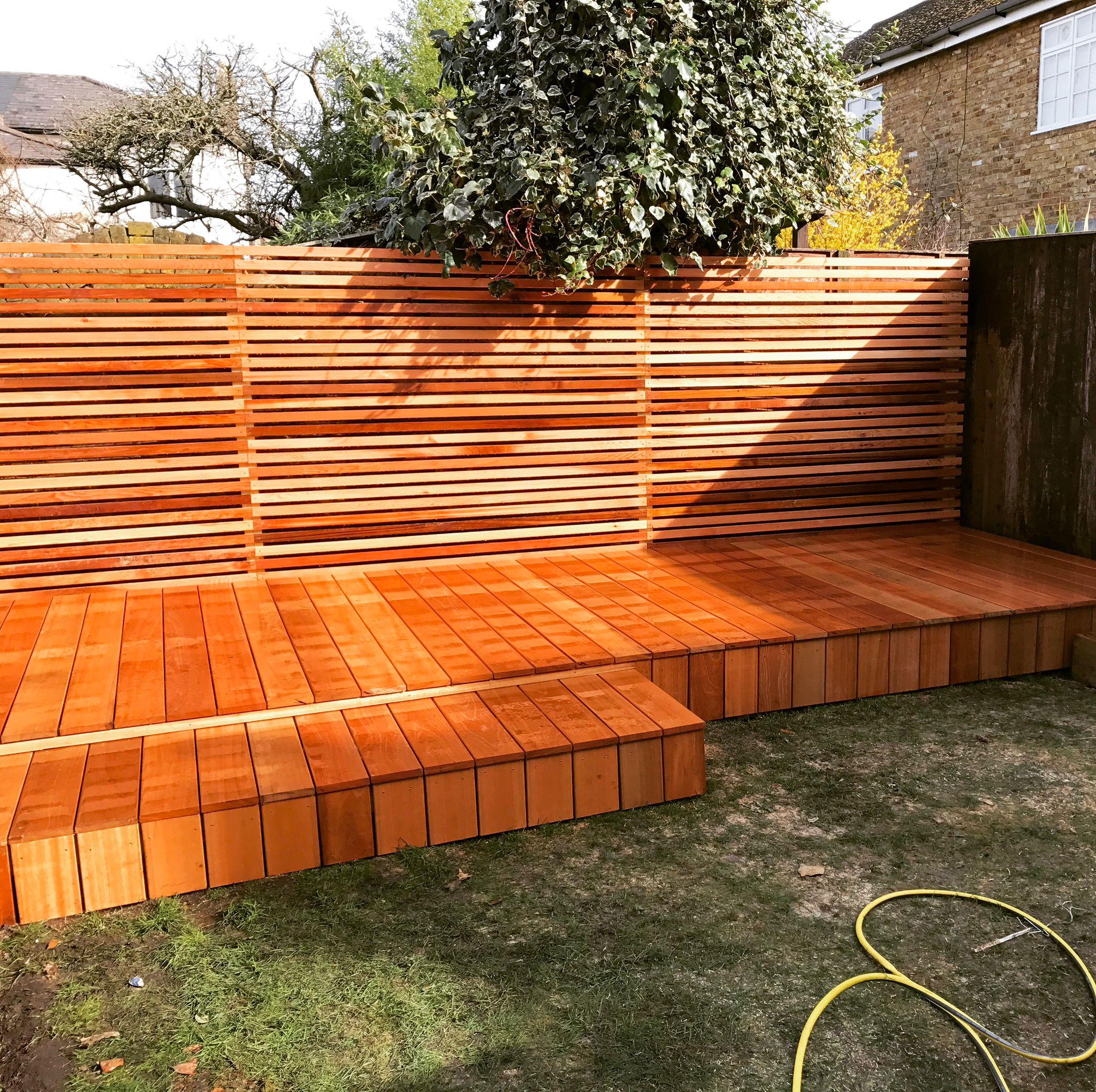
Horizontal slat fencing, boards running left-right rather than vertically, has grown rapidly in popularity over the last five years. It looks sharp and contemporary, pairs well with modern landscaping, and can be constructed with small gaps between boards to reduce wind resistance while still providing strong privacy.
Hardwood species like iroko or tropical hardwood look exceptional and are more durable than softwood. Composite options are also increasingly available and offer low-maintenance performance. The main consideration is that horizontal boards are slightly more prone to sagging over time if the framework is not rigid enough, get the post spacing and framework right.
3. Panel fencing
Panel fencing, interwoven or overlapping pre-made panels slotted into posts, is the cheapest option and the most commonly installed. Panels are available in various styles: lap, featheredge, tongue-and-groove. They are quick to install and look presentable initially.
The significant weakness is that they behave like a solid sail in strong winds. A full panel offers no wind relief, creating substantial force on the posts in storms. Panel fences have a shorter lifespan than close board fencing, typically 10 to 15 years for a budget panel, and cannot be repaired incrementally.
We install panels when budget is the primary constraint or for less exposed garden sections. For any boundary that takes direct weather, we strongly recommend close board on concrete posts instead. The additional cost is modest; the additional lifespan is significant.
4. Trellis and decorative screening
Trellis panels are ideal as a partial screen where some light and airflow is desired, above a solid fence or wall, or as a standalone screen in a sheltered spot. They are not a substitute for full privacy fencing. Decorative cut screens in timber or Corten steel are growing in popularity for garden dividers, creating visual interest and screening without full enclosure.
5. Metal and composite fencing
Metal fencing, wrought iron-style panels, steel palisade, or aluminium post-and-rail, is increasingly popular at the front of properties for a smart, open boundary. Aluminium in particular requires no maintenance and will not rust. Composite fencing panels made from wood-plastic mix are also growing, they look like timber but need no staining or treatment.
6. Which fence is best?
For rear and side garden boundaries: close board fencing on concrete posts, stained in a colour that complements your garden. For front boundaries: hit-and-miss or horizontal slat if you want a contemporary look, or metal/aluminium for low maintenance. Avoid cheap lap panels for any exposed boundary, they are a false economy.