The phrase "low-maintenance patio" gets used a lot in garden design, but what it actually means depends on the material. Some surfaces need no attention whatsoever beyond an occasional jet wash. Others need annual re-sanding, re-sealing or weed treatment. Here is an honest comparison based on what we install and maintain every year across Surrey.
1. What "low maintenance" actually means
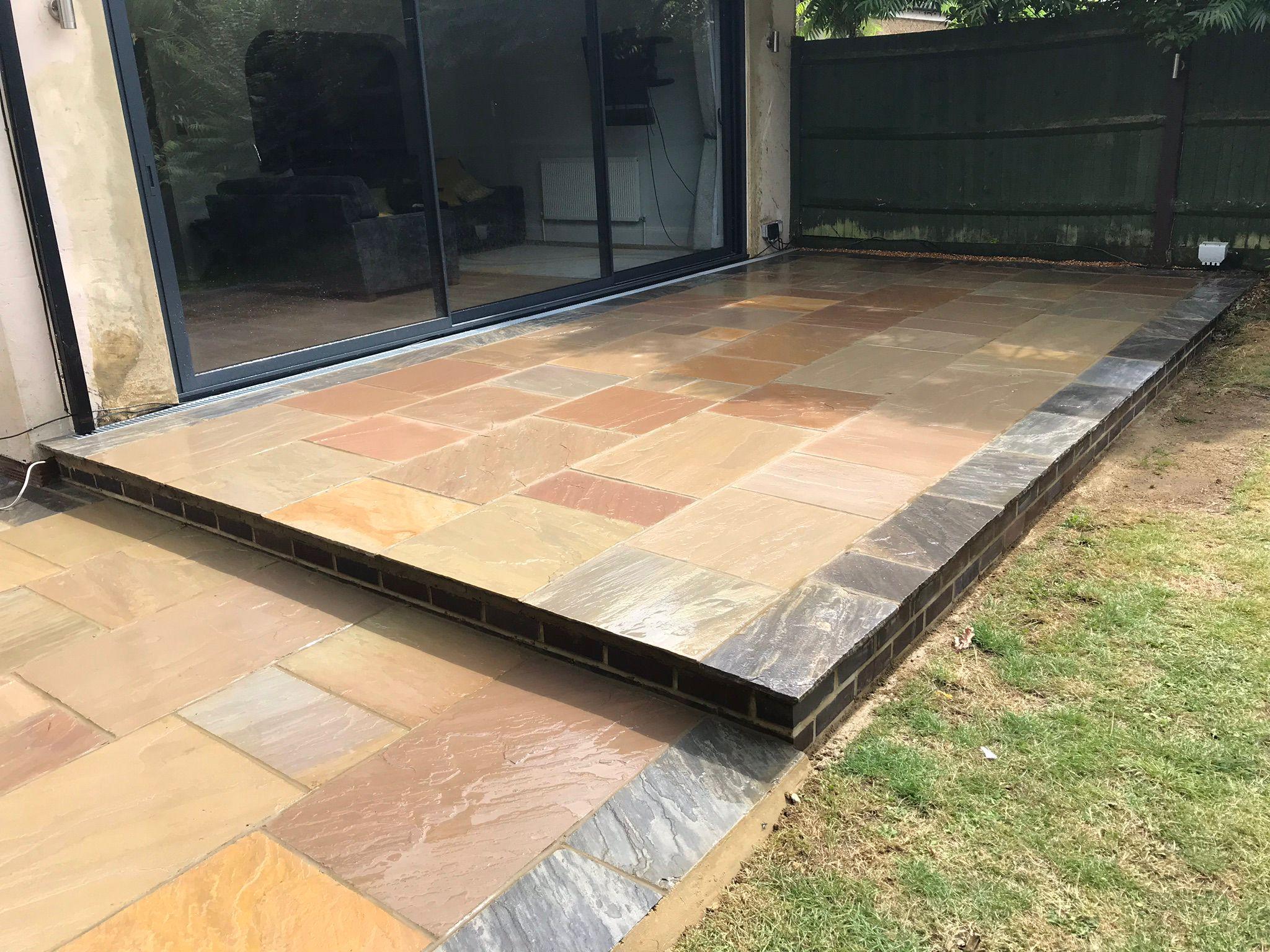
Genuinely low-maintenance outdoor paving has three qualities: it resists weeds growing through joints, it does not stain easily or permanently, and it retains its appearance without annual treatment. By this definition, several popular patio materials fall short, Indian sandstone, for instance, looks beautiful but needs sealing every one to two years to prevent staining.
The joint type matters as much as the paving material itself. A sandstone patio on traditional dry mortar joints will grow weeds. The same sandstone on resin-bound joints will not. Material choice and jointing method together determine how much work a patio creates.
2. Porcelain, the top choice for low maintenance
Porcelain is the single most popular upgrade we carry out for homeowners who have had enough of weeding and resealing. Fired at very high temperatures, it is essentially non-porous, water, oil and wine sit on the surface rather than absorbing into it. A jet wash once or twice a year is all it needs to look like new.
It is available in a huge range of styles, from large-format grey or cream slabs to stone and wood-effect finishes. The look has improved dramatically over the last five years and many of our clients genuinely cannot tell it apart from natural stone until they touch it.
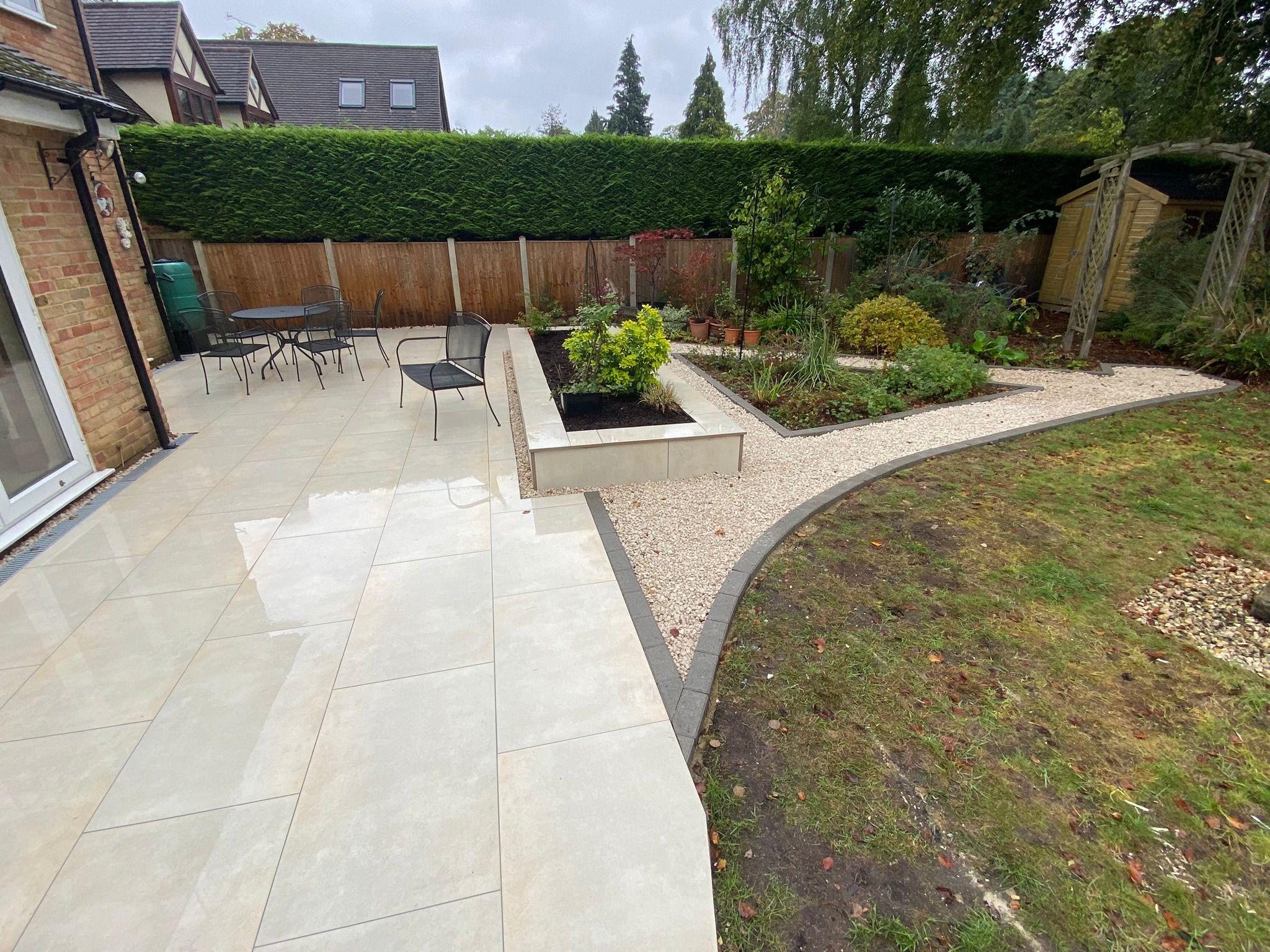
The main limitation is cost, porcelain is typically £90 to £150 per m² installed in Surrey, compared to £60 to £100 for Indian sandstone. It is also harder to cut cleanly, requiring a specialist wet saw, which means installation should be done by an experienced contractor.
3. Resin-bound stone, seamless and weed-free
Resin bound paving uses natural aggregate mixed with a clear UV-stable resin and trowelled onto a prepared concrete or tarmac base. The result is a smooth, permeable, completely seamless surface with no joints for weeds to grow in. It requires virtually no maintenance, no weeding, no re-sanding, no sealing.
The main maintenance requirement over time is watching for delamination if the base was not prepared properly, and UV yellowing if a cheap resin was used. A quality installation with UV-stable resin on a sound base will look good for 15 or more years.
4. Composite decking, low maintenance but not zero
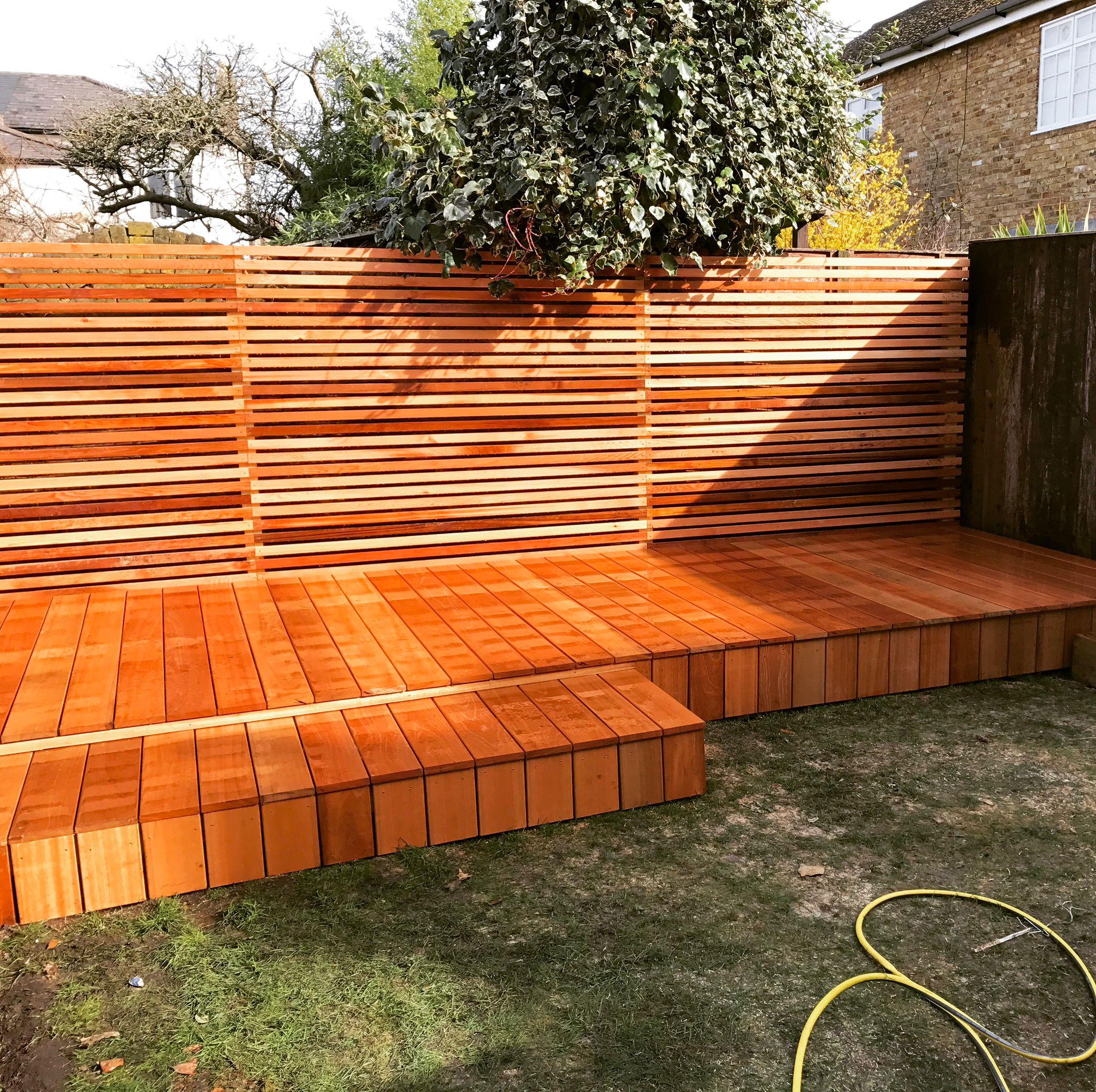
Composite decking, timber-effect boards made from a mix of wood fibre and plastic, has improved enormously in quality. Premium boards from brands like Millboard are virtually indistinguishable from real hardwood, and genuinely need very little attention: an annual wash with soapy water is usually enough.
The caveat is that "composite" covers a wide range of quality. Cheap boards with low plastic content will fade, stain and grow algae within a few years. We specify only full-capped composite (completely encased in plastic), which is more expensive but genuinely low-maintenance.
5. What to avoid if you want low maintenance
- Unsealed Indian sandstone, stains easily, needs annual sealing
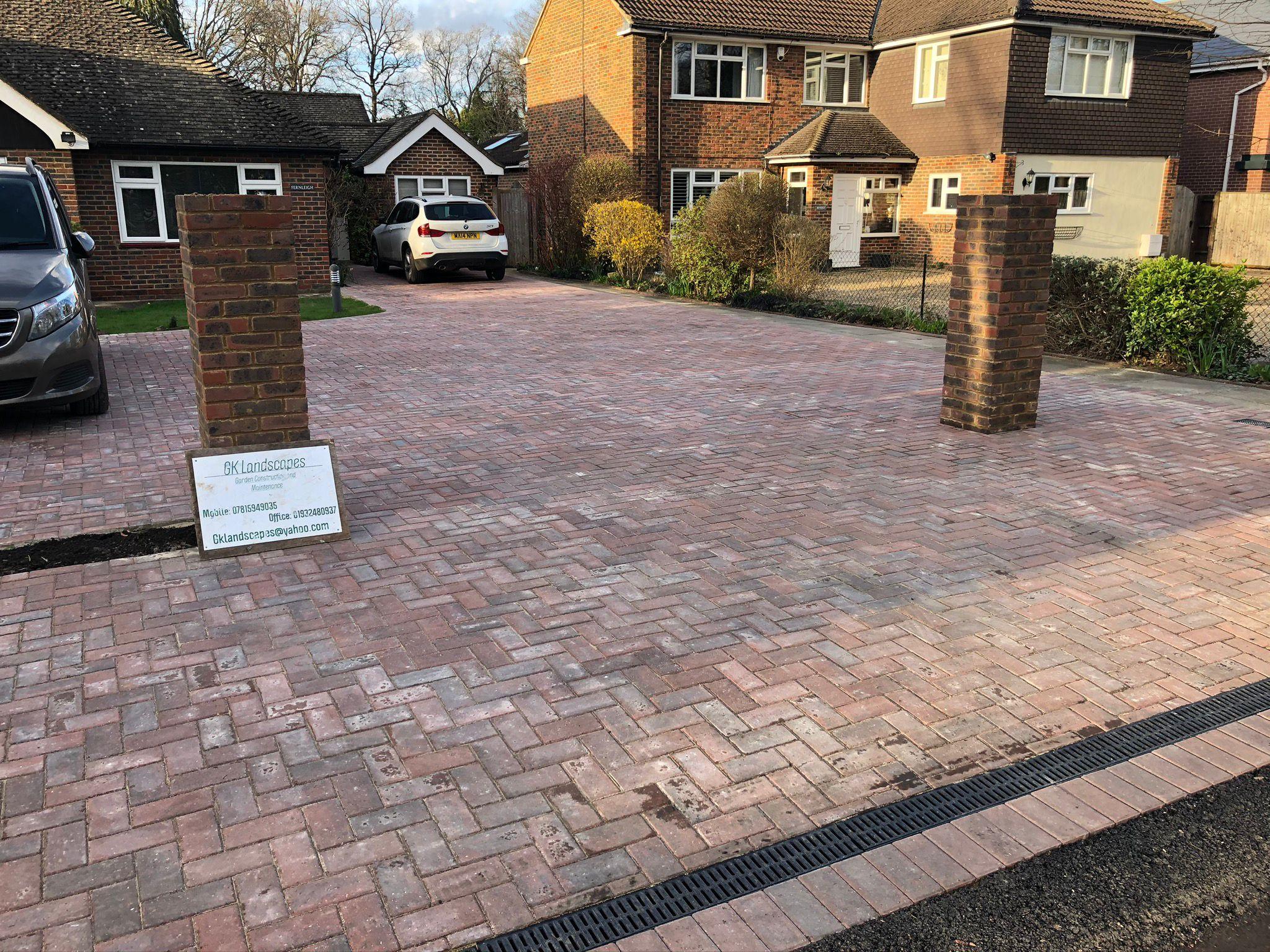
- Concrete paving with sand joints, weeds establish quickly
- Cheap composite decking, fades and grows algae without proper maintenance
- Gravel without a weed membrane, looks good initially but becomes a weeding job
6. Our recommendation
For most Surrey gardens: large-format porcelain on a full mortar bed with polyurethane grout. It looks exceptional, requires almost no upkeep, and holds its value. If you want decking rather than paving, specify full-capped composite. In both cases, installation quality is as important as material quality, a porcelain patio on a poor sub-base will crack and move.
| Surface | Maintenance level | Lifespan | Cost (installed) |
|---|---|---|---|
| Porcelain | Very low | 25+ years | £90–£150/m² |
| Resin bound | Very low | 15–20 years | £80–£140/m² |
| Full-capped composite | Low | 20–25 years | £80–£140/m² |
| Indian sandstone (sealed) | Medium | 20+ years | £60–£100/m² |
| Concrete paving | Medium-high | 15 years | £40–£70/m² |