A garden renovation done well makes a huge difference to how a property looks and functions. Done badly, it is a frustrating, expensive exercise that leaves you with something that almost works. The difference usually comes down to planning. Here is the process we walk every client through before a shovel goes in the ground, based on years of landscaping across Surrey.
1. Start with how you want to use the space
Before any thought about materials or contractors, get clear on what the garden actually needs to do. Hosting summer barbecues? A large level terrace that connects to the house. Young children playing? Lawn area, good drainage, safe surfaces. Low maintenance? Hard landscaping over lawn, minimal planting beds.
Write it down. A brief that says "we want a patio, better fencing, and somewhere for the kids to play" is something a contractor can price and plan. "We want it to look nice" is not. The brief determines everything downstream, surface choices, layout, phasing and budget.
How will you use the garden day-to-day? What time of year matters most? How much maintenance are you willing to do? Are there specific problems to solve, drainage, privacy, slope? What has to stay (mature trees, existing structures)?
2. Set a realistic budget
Surrey landscaping prices have risen significantly. A full rear garden renovation, patio, fencing, lawn, planting, for an average 60 to 80m² space will typically cost between £8,000 and £25,000 depending on materials and scope. This is not a budget to reduce by skimping on the sub-base or using cheap materials, those decisions create problems within a few years.
If the budget does not stretch to everything at once, phase the work. Start with the structure, patio and fencing, then add lawn and planting. This way the expensive, disruptive groundwork happens once and the finishing can follow in subsequent years.
3. Survey and measure the space
Measure the garden accurately. Note gradients, even a slight slope affects drainage planning and can require additional groundwork. Mark positions of manholes, drains, and any underground utilities (call Dig Safe before any serious excavation). Note which direction the garden faces and where shade falls at different times of day, this affects material choice (north-facing porcelain can stay damp and slippery; south-facing dark surfaces absorb more heat).
4. Choose materials that work together
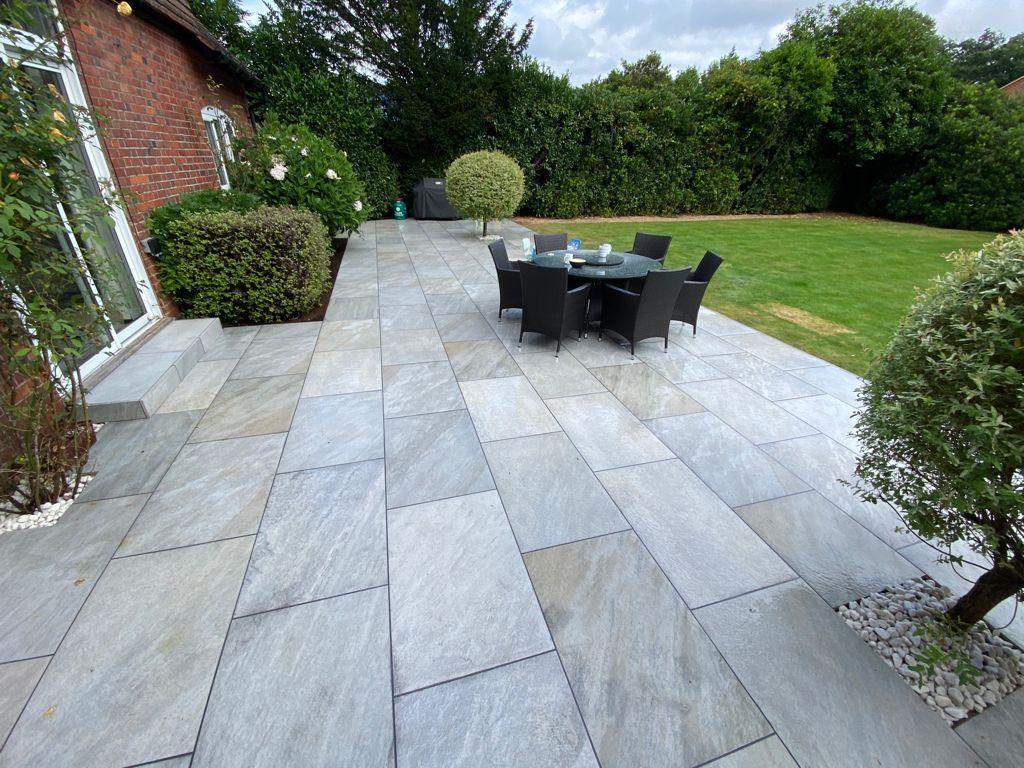
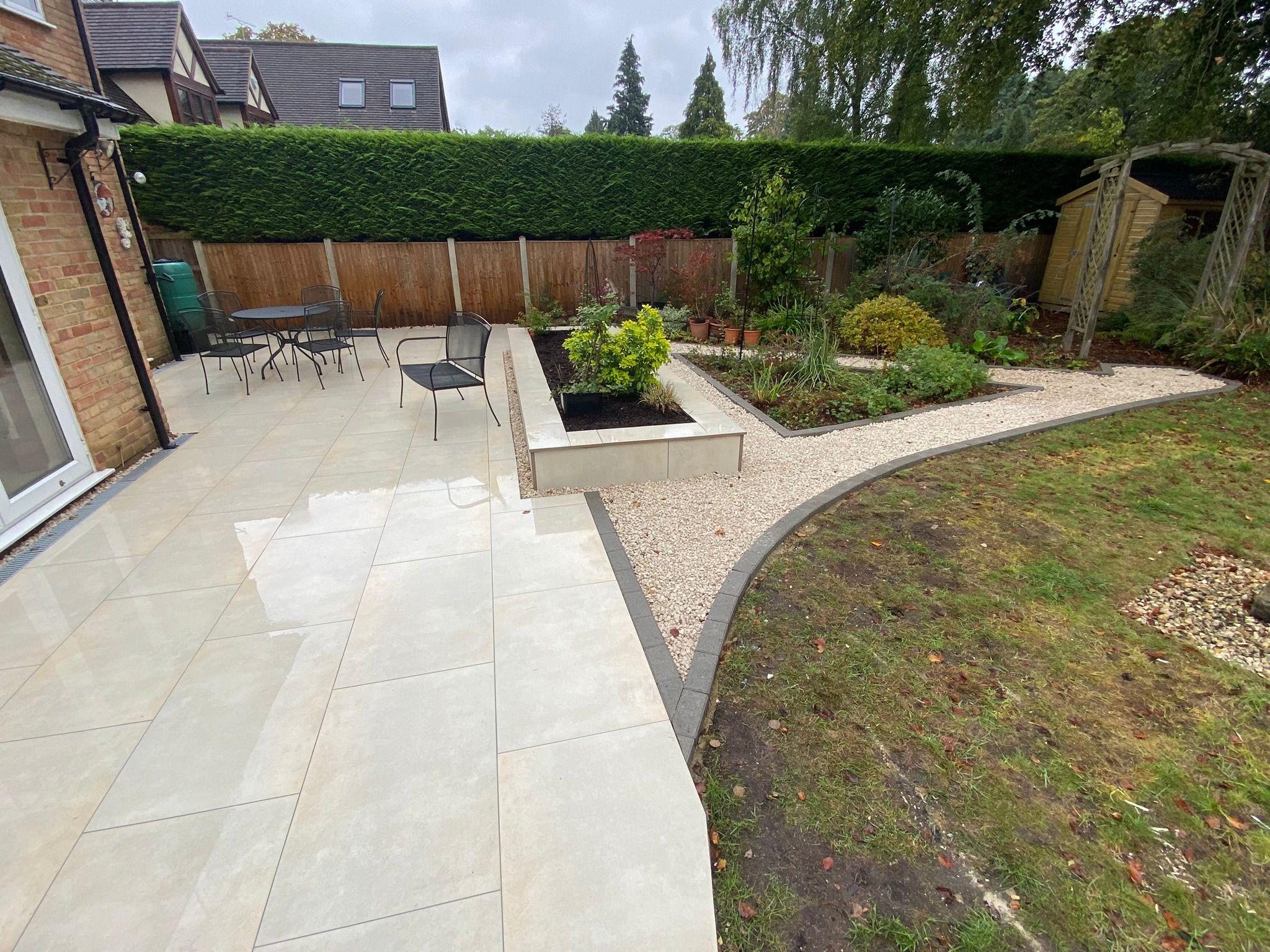
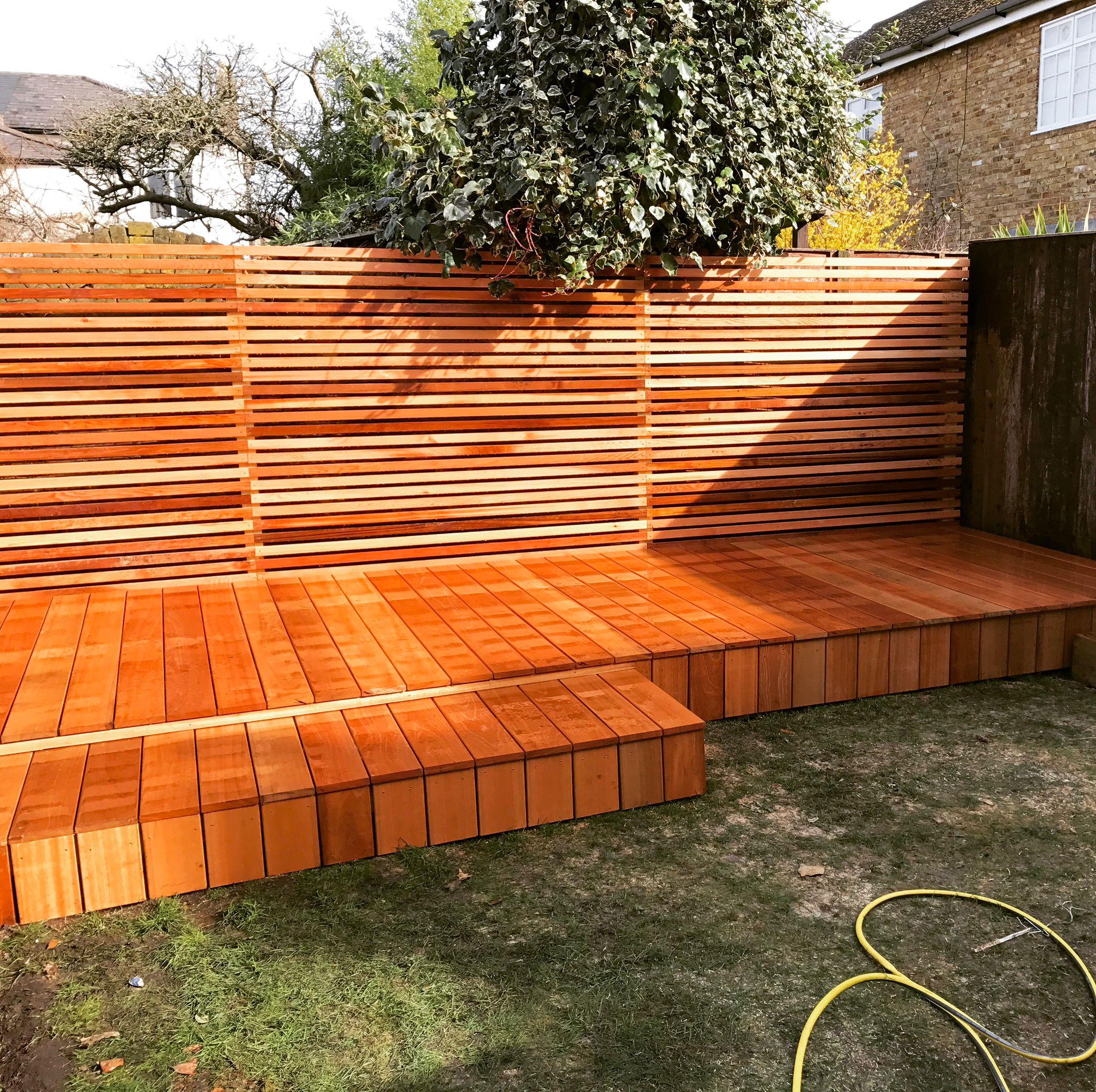
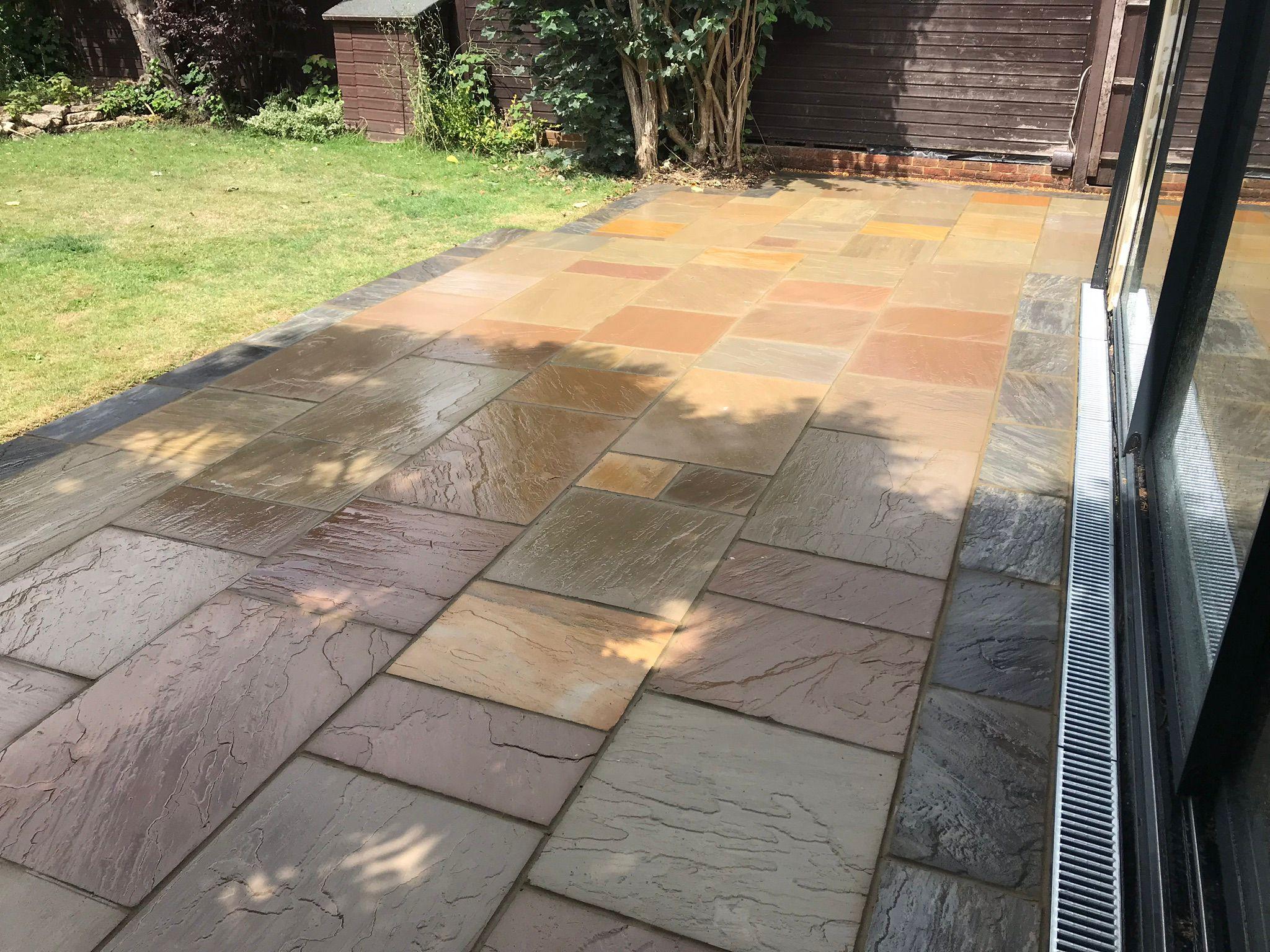
The best garden renovations use a limited palette, usually two or three materials that complement each other. A porcelain patio with composite decking and charcoal close board fencing is a coherent scheme. The same porcelain mixed with red brick edging and brown lap panels is not.
Consider the house too. A cream porcelain patio looks beautiful against a red brick house; the same cream patio against a grey-rendered extension looks cold. Bring material samples to the site and view them in context before committing.
5. Finding and briefing contractors
Get three quotes, but make sure you are comparing like for like. Each quote should specify sub-base depth, materials by brand and specification, what is and is not included, and a payment schedule. A quote that just says "supply and lay patio" is not comparable with one that specifies 150mm MOT Type 1, full bed mortar, polyurethane grout and stain guard.
Asks for a large deposit upfront. Cannot provide references. Quote significantly lower than others without explaining why. No written specification. Reluctant to provide a written contract.
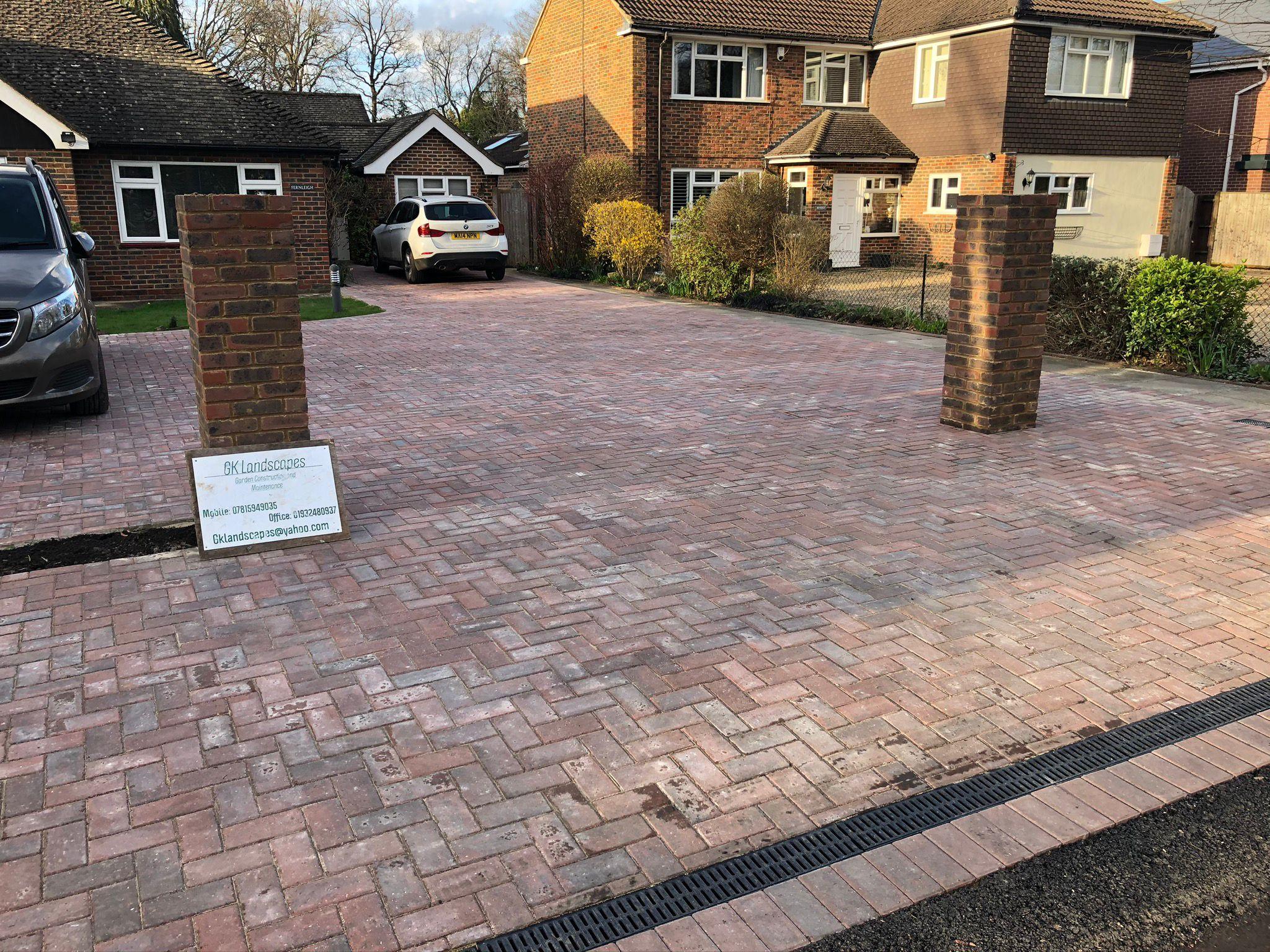
Check reviews on Checkatrade, Trustpilot or Google, and look at the photos. Anyone can write a five-star review, but photos of completed work in the right style tell you a great deal about quality and attention to detail.
6. Timing and phasing
Most hard landscaping can be installed year-round in the UK, though very cold snaps and prolonged frost affect mortar setting times. The best time for turfing is autumn, the grass establishes well with lower temperatures and higher rainfall. Avoid turfing in summer unless irrigation is in place.
Reputable contractors in Surrey are often booked 6 to 10 weeks out. If you want work done for a particular date, bank holiday, child's birthday, summer entertaining, plan accordingly and book early.